Bra Sister Sizes Explained: Find a Better Fit Without Starting Over
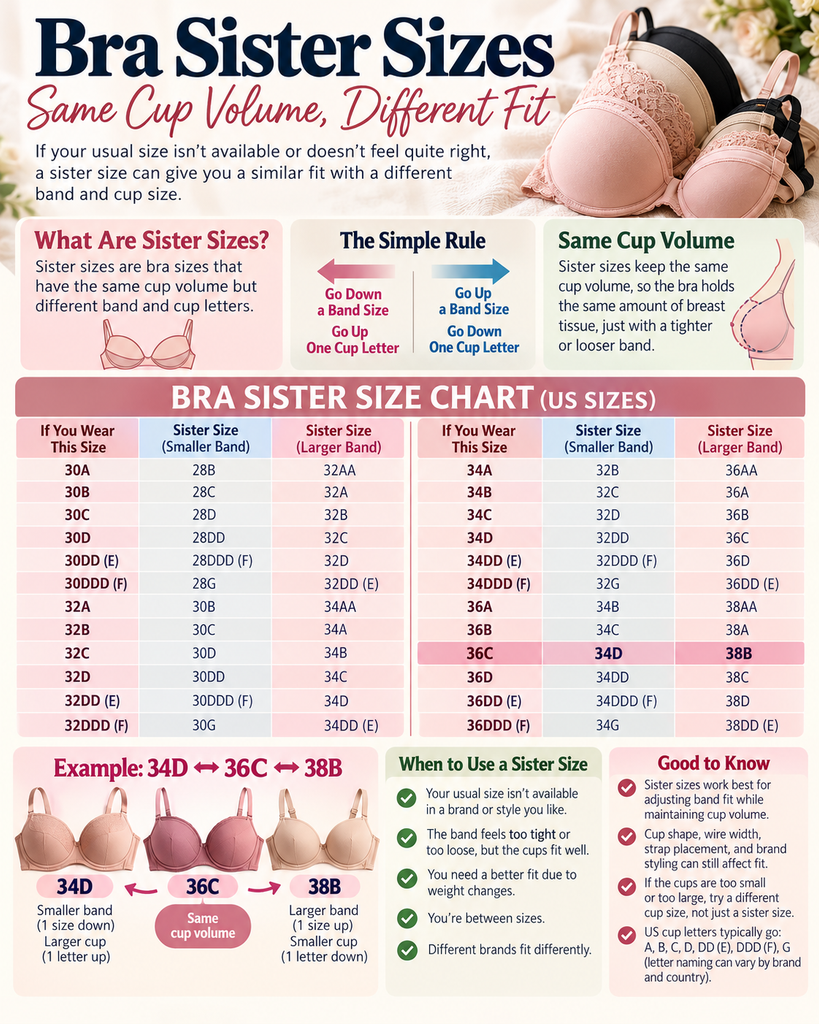
Bra sister sizes are alternative bra measurements that offer the same cup volume with a different band size.
Because cup volume is proportional to the band, moving up one band size means moving down one cup size to keep the same fit.
Conversely, moving down one band size means moving up one cup size.
This simple math helps you find a comfortable fit when your current bra feels too tight or too loose.
Bra Sister Size Chart & Guide
What are bra sister sizes?
Sister sizes are bra sizes with about the same cup volume but different band sizes.
The rule is simple:
- Go down one band size → Go up one cup letter.
- Go up one band size → Go down one cup letter.
For example, a woman who normally wears a 36C has two immediate sister sizes: 34D and 38B.
Bra sister size reference chart
US BRA SIZING • EQUIVALENT CUP VOLUME
| Smaller band | Starting size | Larger band |
| 30D | 32C | 34B |
| 32D | 34C | 36B |
| 32DD | 34D | 36C |
| 34DD | 36D | 38C |
| 34DDD | 36DD | 38D |
| 36DDD | 38DD | 40D |
| 36G | 38DDD | 40DD |
| 38G | 40DDD | 42DD |
US sizing convention: DD = E, DDD = F, G follows DDD. Letter naming varies by brand and country. The chart shows approximate cup-volume equivalents, not guaranteed fit equivalents.
How to use the chart
Suppose your usual bra is a 36C.
Tighter band
34D
Your size
36C
Looser band
38B
All three sizes have approximately the same cup volume.
If your 36C band feels too tight but the cups fit well, try a 38B. If the band is too loose but the cups fit well, try a 34D.
Important: Sister sizing works best for adjusting band fit while maintaining cup volume. Cup shape, wire width, strap placement, and brand differences can still affect comfort.
If the cups are too small or too large, switching to a sister size may not solve the problem.
Quick Guide to Bra Sizing
A 34C has the same cup volume as a 32D and a 36B. These are sister sizes, meaning they share the same cup capacity despite different band measurements.
Sister size up if your current band feels tight on the loosest hook. If the wires dig into your ribs or leave red welts, the band is too small, not the cup. Moving to a larger band size while dropping one cup letter preserves the volume you need.
Sister down a size if your current band feels loose on the tightest hook. A band that rides up your back provides zero support. If you can pull the band more than two inches away from your skin, it has lost its tension.
Change only your cup size if the band fits well but the cups do not. If you spill over the top, go up one cup letter. If the fabric wrinkles, go down.
Stay within one step of your usual size to keep the wire width and strap spacing comfortable. Jumping more than two sizes often shifts the wire into sensitive breast tissue, causing permanent discomfort.
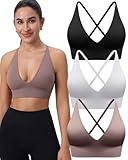
- Adjustable Straps:We understand that every body is unique, which is why our multi-pack adjustable strap sports bras are designed with customizable features to ensure the perfect fit…
- Deep V Triangle Cup Design: Elevate your activewear with our deep v neck sports bras, featuring a stylish and sophisticated design that exudes confidence and allure. The deep V neckline…
- Two Straps Options:Elegant sexy spaghetti strap bras with two back cross-wearing options, giving you the freedom to choose between a traditional straight-back style or a trendy…
Last update on 2026-10-29 / Affiliate links / Images from Amazon Product Advertising API
Why Sister Sizes Work for You
These sizes work because of how manufacturers grade patterns. A cup size isn’t a fixed measurement; it’s a ratio relative to the ribcage.
When you increase the band length, the wire frame and cup volume shift to maintain the same coverage. Moving from a 34C to a 36B increases the band by two inches while the cup volume stays largely the same.
People often assume a “C” cup is a fixed size, but it measures the difference between your bust and ribcage. When the band expands, the cup must shrink to keep the same amount of fabric over your tissue.
If you keep the same letter while moving to a larger band, you’re actually increasing the total volume. This is why a 36C feels significantly larger than a 34C.
If the center gore—the bridge between the cups—digs into your chest, your band is likely too tight. Try moving up one band size and down one cup size to maintain the same volume while easing the pressure.
If the straps fall off or the back rides up, the band is too loose. In this case, move down one band size and up one cup size.
You can test this fit by checking the wires. If the underwire sits on your breast tissue rather than your ribcage, your cup volume is too small, regardless of the band size. Don’t rely on the letter alone.
If you feel “spillage” at the top of the cup, you need a larger cup size, not necessarily a larger band.
By shifting to a sister size, you solve mechanical issues while keeping the cup volume exactly where your body needs it for support.
When the Answer Is Different
The following situations require you to ignore sister sizing and choose a different path to improve your fit.
| Situation | What changes | What to do instead |
|---|---|---|
| Band fits well | Cup volume only | Change only the cup size |
| Cups overflow | Total breast volume | Increase cup size only |
| Straps dig in | Shoulder pressure | Check band size first |
| Wires poke ribs | Frame shape | Try a different brand |
| Large gap at top | Cup depth | Decrease cup size only |
If your band feels loose but the cups fit perfectly, sister sizing will only leave you with a cup that’s too small.
In this case, decrease the band size by two inches and increase the cup letter to maintain the same volume.
Most people mistakenly assume that if the gore doesn’t touch their sternum, they need a larger cup.
If the gore floats while the wires sit on breast tissue, the band is likely too large to provide tension. Move down one band size before adjusting the cup.
If you have a shallow shape, you’ll often experience gaping at the top of the cup even if the volume is correct.
Don’t go down in cup size. Instead, look for half-cup or balconette styles that offer less vertical depth. If the wires poke your armpits, your frame is likely too narrow for that specific brand’s grading.
Switch to a brand known for wider wires to stop the pressure.

- ULTRA-LIGHT UNDERWIRE BRAS FOR WOMEN – Designed for natural support without bulk, this women’s bra has ultra-light spacer cups and an underwire that provide shaping plus a breathable…
- SMOOTH T-SHIRT BRA DESIGN – One Smooth U bras lie flat under clothing to help minimize bra lines. The seamless spacer bra cups create a smooth look under tees, blouses, sweaters, and…
- SUPPORTIVE INNER SLING CONSTRUCTION – Built with a soft inner sling and spacer bra cups for shaping and support, this women’s underwire bra blends structure and comfort for a…

Last update on 2026-10-29 / Affiliate links / Images from Amazon Product Advertising API
How to Do It Properly
Test your band by wearing the bra on the loosest hook. This ensures you can tighten the fit as the elastic inevitably stretches over time.
If the band feels tight on this loosest setting, move up one band size and down one cup size to maintain the same total cup volume.
If the band feels loose even on the tightest setting, move down one band size and up one cup size. This adjustment prevents the band from riding up your back, which is the most common mistake that causes poor support and shoulder pain.
Check the center gore to ensure it lies flat against your sternum. If it floats away from your body, the cups are too shallow to contain your tissue, and you need a larger cup size.
Limit your adjustments to one sister size step away from your measured size. Going further changes the wire width and strap spacing, which can cause the wires to dig into your ribs or the straps to slip off your shoulders.
Finally, perform a “scoop and swoop.” Lean forward and use your hand to pull all breast tissue from your sides into the cups.
If you see spilling at the top or sides after this, the cups are too small.
The Mistakes That Ruin It
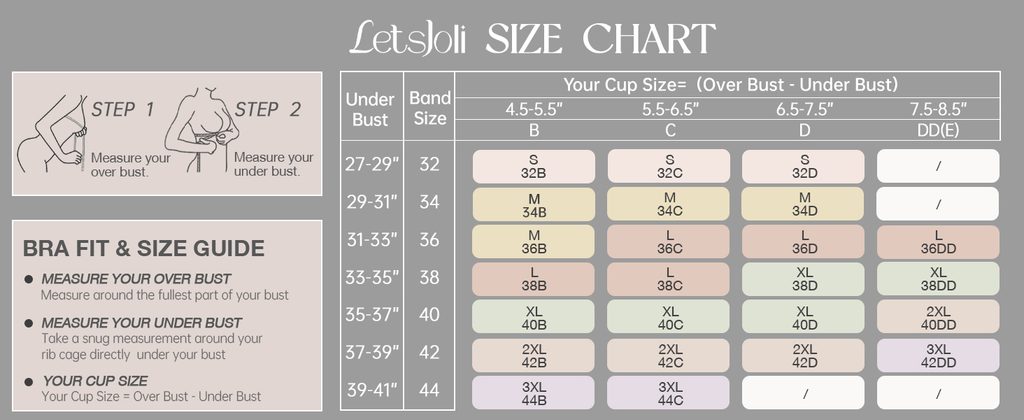
Moving more than one step away from your original size often makes the wire too wide or too narrow for your chest. If the wire sits on breast tissue rather than the ribcage, you’ll experience constant chafing and discomfort.
Using a sister size to fix a cup issue when the band already fits correctly usually leads to a loose, unsupportive bra.
If you move up a band size to gain cup volume, the band will inevitably ride up your back within a few hours of wear.
Always test a new bra on the loosest hook. If it feels secure on the tightest setting immediately, the band is already too large and will lose all tension once the fabric relaxes. You should be able to fit no more than two fingers under the band.
Assuming every brand uses the same sizing scale is frustrating, since manufacturers vary their patterns by up to half an inch.
If you’re between sizes, choose the brand that prioritizes cup depth over gore width.
A gore that tacks flat against your sternum is the only reliable indicator of a proper fit.
Frequently Asked Questions
Can I use sister sizes if I have a small band?
Yes, you can use sister sizes as long as you keep the same cup volume. For example, a 28D is the sister size of a 30C, meaning both have the same cup volume. However, always test the band comfort first to ensure the wire frame sits correctly against your ribcage.
Does it matter which sister size I choose?
It does matter because moving too far from your base size changes the bra’s structural design. If you go more than one step away, the distance between the straps and the underwire width will no longer match your proportions. Stick to the immediate sister size to keep the wire width and strap placement comfortable for your body type and shoulder width.
What happens if I go up two band sizes?
To maintain volume when increasing two band sizes, you must decrease two cup sizes. For instance, a 34C is equivalent to a 38A. However, we rarely recommend this because the bra frame is engineered for a specific ribcage width, which can cause the band to ride up.
How long should a new bra feel tight?
A new bra should feel snug on the loosest hook without causing pain or deep red marks. The band typically loosens slightly after a few wears as the fabric relaxes. If it remains uncomfortable after several uses, you likely need a larger band size.
Is it safe to change cup sizes?
It’s safe to change cup sizes if your breasts change due to weight fluctuations, hormonal cycles, or pregnancy. Always prioritize how the wire sits around your breast tissue rather than sticking to a single letter size. If you notice spillage or gaps, use the sister-size method to adjust the band-to-cup ratio until the fabric lies flat against your skin without pinching or pulling.
How often should I check my size?
Check your bra size at least once every six months to account for natural changes in your body. Many people find their size fluctuates, making old bras feel too tight or too loose. Track your current measurements and use sister-size logic to easily adapt your collection and ensure you always have a comfortable, supportive fit.

- BEAUTY BACK FULL FIGURE UNDERWIRE MINIMIZER: Style Number 76080, with 4-way stretch fabric that shapes and smooths bumps and bulges along back and sides
- REDUCED BUSTLINE BY UP TO 1.5 INCHES: This bra is designed to reduce the appearance of a larger bustline by redistributing breast tissue, offering a better fit under clothing
- TWO-PLY NON-PADDED CUPS: Non-padded cups that deliver the coverage and support you need for comfort
Last update on 2026-10-30 / Affiliate links / Images from Amazon Product Advertising API
Our Conclusion
Finding the right size is about more than just a number on a tag.
By understanding how the band and cup work together, you can make small adjustments that significantly improve your comfort.
Always prioritize band fit first, as it forms the foundation of the entire garment; then refine your cup size to ensure it supports your shape correctly.