How Are Bra Sizes Determined?
Key Takeaways
- Bra sizes are a combination of band and cup measurements. Measure just below the bust and around the fullest part snugly for each to get your numbers. With a metric tape, measure and note both measurements. Consult a brand’s size chart prior to purchase.
- The band does most of the supporting and should sit level and snug without riding up. Begin on the loosest hook when new and adjust as the bra stretches.
- Cup size is calculated by subtracting the band from the bust and matching the difference to a cup letter. Increments and labels differ by country and brand. Always keep a quick reference handy and check with fit, not just the number or letter.
- Anticipate size differences between styles and manufacturers and use sister sizes to zero in on fit. Experiment with different sizes and shapes and focus on what’s most comfortable, supportive, and has a flat center gore.
- Breast shape and tissue density dictate what cup structures work best, from more structured cups for denser tissue to fuller coverage or side support for softer tissue. Select styles that flatter your shape to minimize gaping or spillage.
- Re-measure periodically as body changes over time, and use a fit checklist for band, cups, straps, and gore. Whenever you shop internationally, check conversions against country-specific charts to prevent mismatches.
Bra sizes explained means knowing how band, cup, and sister sizes work in tandem to build a comfortable, supportive fit. For most of us, our bodies transform as we age and with hormones and weight fluctuations, which means our sizing requirements do as well.
Thanks to sister sizing, your 36C in one brand can equal a 34D in another. Band measures the ribcage in centimeters or inches. Cup volume comes from the bust minus band difference.
To establish some ground, the following sections explain.
How Bra Sizes Are Determined
Bra sizes consist of two key components: bra band size (the number) and cup sizes (the letter). These measurements are based on accurate underbust and bust circumference measurements, forming the foundation for finding the correct bra size. Familiarity with the bra size chart is essential, especially since sizing varies between countries, such as UK/US and EU bra sizes.
1. The Band Measurement
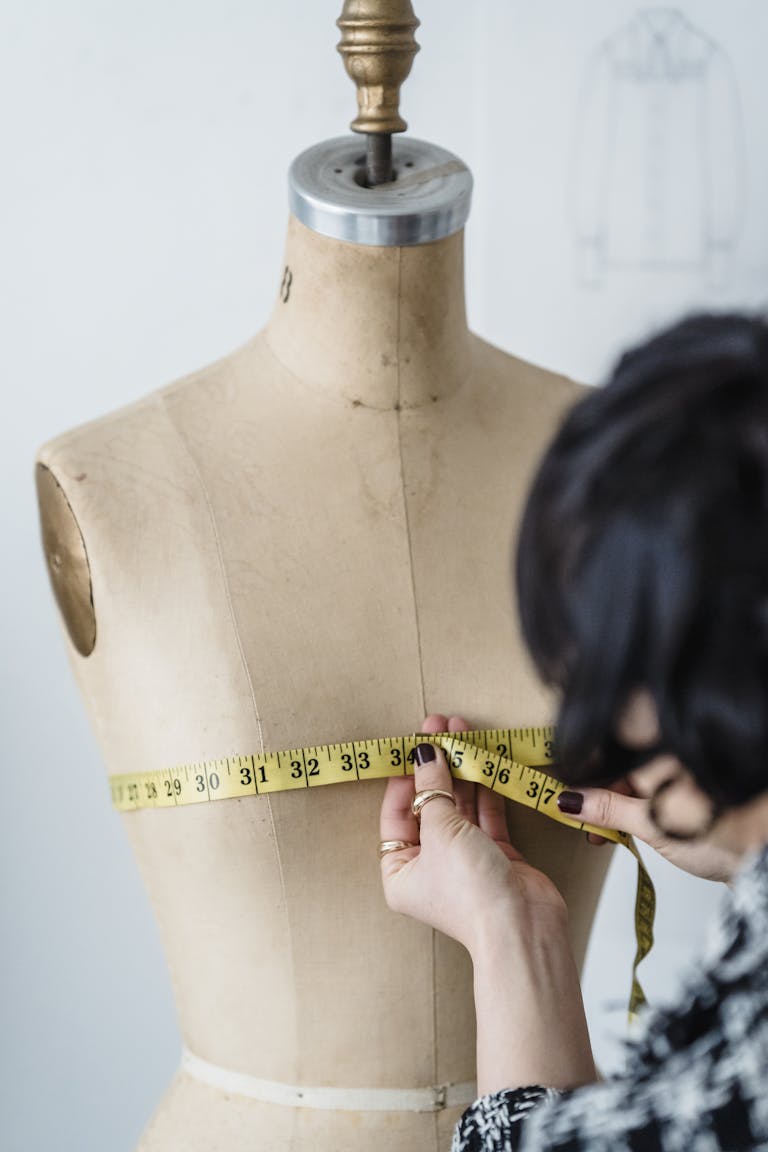
Measure firmly under your bust, around your ribcage, keeping the tape level and parallel to the floor. Exhale normally. You’re looking for a snug, secure measurement, not painful.
Band sizes come in inches or centimeters and form the numeric portion of your size, like 34B. Bands go approximately from 28 to 56 in many ranges, and EU bands are often from 60 to 120 centimeters. Others round in 5-centimeter increments.
Most of a bra’s support comes from the band, so accuracy matters. If you’re in between sizes, round up to the nearest even number for comfort and stability. If you’ve come across the ‘+4’ method, it’s an older method. If a tight band measurement feels too tight, going up one in your band is a fine option.
A good band fits snug around the ribcage with one to two fingers sliding underneath. If it rides up, your band is too loose.
2. The Cup Calculation
Put on an unlined bra and measure around the maximum circumference of the bust, tape loose but firm. Write down this bust number.
Subtract the snug band measurement from the bust measurement to approximate the cup. Each increment of difference corresponds to letters (A, B, C, etc.) and some areas employ numeric cups. Since the cup is relative to the band, a 34D is not the same cup volume as a 38D!
Country and brand rules differ, so two “D” cups might not feel the same. That is natural, not your doing.
3. The Sizing Formula
Bust minus band equals cup size. As a quick guide: 2.5 cm (approximately 1 inch) equals A, 5 cm equals B, 7.5 cm equals C, 10 cm equals D, continuing upward (many ranges extend to N).
Make a mini cheat sheet for your usual variances. Other systems begin at different increments or have double letters (DD/E, FF), so check each brand’s chart before you purchase.
4. The Self-Measurement Guide
To determine your correct bra size, take both measurements with a soft tape while standing straight with arms at your sides. Ensure you’re wearing a thin, non-padded bra. Measure your underbust snugly to find your bra band size, and take your bust measurement at the fullest point. Use a complete bra size chart to map these measurements to your fitting bra size.
It’s essential to recheck your measurements every six to twelve months, as factors like shape, weight, hormones, and age can shift your fit more than we realize. Keeping track of these changes can help you avoid wearing the wrong bra size, ensuring you always have the perfect bra for your needs.
Understanding how to measure for the right bra is crucial for breast support and comfort. Regularly updating your bra measurement helps you find the best fit in different styles, whether it’s a plunge bra or a demi bra. This way, you can confidently choose from various bra designs that suit your breast shapes and sizes.
5. The Sizing Nuances
Breast shape, tissue softness, root width and torso length all alter the way a size wears. Full on top breasts sometimes require greater cup depth, while shallow shapes frequently favor wider wires.
Brands see standards differently, so anticipate some variation. Cup volume varies with band size. These are sister sizes. For instance, 34C is approximately equal to 36B and 32D, even though the bands are different.
If the band is tight, sister size up. If it is loose, sister size down.
Try multiple sizes and styles: balconette for lift after volume loss, stretch lace for asymmetry, and wire-free with broad bands for tender days. Fit first, label second.
Beyond the Measuring Tape
Measurements provide a place to start, not the solution. Bra sizes have two parts: the band (a number) and the cup (a letter). Cup letters are not set volumes between brands, and techniques range from the ‘+4’ method to flat underbust measurements in centimeters. Comfort and support count as much as the tag.
A proper fitting bra should feel like an extension of yourself. Listen to your lifestyle, your clothes, and what your body informs you of itself over time. Sister sizes can save a close-call fit, and measuring every 6 to 12 months comes in handy when life throws change, such as weight fluctuations, pregnancy, or menopause.
Your Body’s Story
Bodies are unique, so the same 80C (or 36C) can feel different on two people. Muscle tone, ribcage shape, and posture all alter how a band sits and how cups align. Size isn’t static.
Weight fluctuations, periods, medications, and aging can all affect tissue volume or distribution. You could wear 75D in the summer and 80C in the winter, and both are correct.
Keep a quick notes list: brand, size tried, what worked, what didn’t (for example, “cup gaping at top,” “band rode up during walking,” “straps slipped in smooth blouse”). Patterns emerge quickly, saving both hours and returns.
Self-knowledge rewards. If your shoulders ache by noon or you fidget with the band, numbers alone aren’t doing the trick. Change styles, experiment with sister sizes, or switch cup construction instead of squeezing into the same size.
Breast Shape Matters
Typical shapes are round, teardrop, bell-shaped, side-set, close-set, projected, shallow, and asymmetrical. Shape influences where volume sits, which dictates cup fit. Evenly full or round breasts generally fit well in balconette or t-shirt bras.
Teardrop and projected forms typically work well in plunge or three-part cups that lift from the bottom. Shallow shapes go hand in hand with demi or lower-coverage balconettes to prevent cup gaping. Asymmetry is helped by removable cookies or stretch lace that balances each side.
Cup design is important. Vertical seams create lift. Diagonal seams mold roundness. Molded cups provide seamless edges but sometimes gap on shallow or soft breast tissue. Unlined lace molds better than thick foam to uneven shapes.
If available, turn to shape diagrams in trusted fit guides and compare your silhouette. Use them as a knowledgeable sieve, not a dictate.
Tissue Density Impact
This type of tissue is more likely to hold shape and leave room at the cup top if the cup is too tall. Softer tissue sinks further, which leads to overflow and side spillage in skinny cups.
Denser tissue typically likes the support of more structured cups, such as three-part, side-sling, or balconette, and a stable band. Softer tissue often requires secure edges, wider wings, or side support to hold everything centered and smooth beneath clothes.
- Stretch-lace upper cups are great for soft or fluctuating tissue.
- Spacer foam: breathable, light structure for mixed densities.
- Rigid simplex or laminated cups are stable for dense tissue and provide higher support.
- Power-mesh side panels: added containment for softer tissue.
- Lightly lined plunge with firm cradle: lift for dense projected shapes.
What a Perfect Fit Feels Like

Comfort, support and confidence arrive hand-in-hand when a bra fits like it should. No pinching, gaping or digging anywhere. It hugs the skin, weightless but grounded, near-invisible to where you can breeze through the day untethered. The correct size enhances your posture and streamlines your figure beneath clothing.
Spruce It Up: What a ‘Perfect Fit’ Feels Like. Check with a quick fit checklist before you buy to confirm the essentials.
The Band
The band provides most of the support, so it should rest evenly around your torso, snug but not uncomfortably tight. Aim for snug contact that you can fit two fingers under the band. Any more and it is probably too loose and will migrate. If the band rides up in the back, the support is failing and the cups or straps will attempt to compensate.
Hook a new bra on the widest catch. As the elastic loosens over time, you can shift inward to preserve fit. Life shrinks if you begin on that tightest hook.
Band fit checklist:
- Level all around, not tilting or climbing
- Two-finger ease; no deep marks after an hour
- No bulging above/below the band
- Comfortable breathing and full rib expansion
The Cups
Cups should encase breast tissue completely, with no spilling over the top or sides and no gaps. The cup edge should lie flat against the breast, not cut in or pucker. Cutting indicates a smaller cup is needed, whereas puckering indicates a larger cup or the wrong cup shape.
Scoop and plop for precision. Lean forward, slip your hand inside the cup and direct tissue from the side and bottom of the cup, then smooth the edge. If your shape is fuller on top, shallow or asymmetric, experiment with different cup styles: balconette, plunge, full coverage, or stretch-lace, until the shape matches your body.
A cup that fits feels like an extension of your body, secure and quiet.
The Straps
Adjustable straps provide gentle lift without digging. They must remain in place as you shift yet not indent by noon. If they slip, tighten a little or try styles with closer-set straps or a J-hook.
Straps are assistants, not the primary support. If tightening is your only solution, the band or cups probably need to be a size up or down. When adjustment can no longer hold, the elastic is worn. Change out the straps if you can, or the bra if you can’t.
The Center Gore
The center gore should lay flat on the sternum, anchoring the cups. A floating or raised gore typically indicates either too small a cup or too loose a band. Plunge bras have a lower gore, so flat means where the gore meets your chest, not high coverage.
If the gore won’t sit flush, try a larger cup, a smaller band, or a style with a narrower gore for close-set breasts. Most experience genuine relief once this anchor falls into place and improved posture along with a sleeker front on clothing.
Common Bra Fitting Mistakes
Fit is a universal problem, as more than 80% of women are thought to be wearing the wrong bra size. This issue often leads to soreness, hunched shoulders, and constant preoccupation. Understanding bra band size and cup sizing is crucial, as these elements come from the difference between bust and band measurements. Nailing these essentials safeguards comfort and support at any age.
Wearing a band that’s too loose
Most of a bra’s support comes from the band, not the straps. A loose band slides, rides up and shifts weight to your shoulders. You may notice red strap marks, a clasp you tighten all day or the back riding up under a t-shirt.
A quick check is one finger under the underband at the front and two fingers at the back as a rough guide. If your band still rides up, drop one band size and to maintain similar cup volume, increase one cup size, for example, 85C to 80D in metric sizing.
For everyday wear or fuller figures, select firmer bands with wider wings, power mesh and three hook columns. For sensitive skin, seek out brushed elastics and soft edges to maintain support without irritation.
Cups that are too small or too large
Small cups either cause top or side spillage, a hard cup edge showing beneath clothes, or a wire laying on breast tissue. Large cups gape at the top or center, or the wire sits too low on the ribcage.
Then adjust by holding the band to size and moving the cup size up or down until the wire surrounds the breast root and the center gore lays flat, except in plunge styles for close-set shapes. Asymmetry is normal; virtually every woman has one breast that’s a bit larger.
Fit to the larger side, then use removable cookies or strap tension to even out the smaller. For example, if an 80C spills at the outer edge in a demi, try an 80D. If an 80D gaps in a balconette, try an 80C or a different cup shape like a plunge.
Relying on old measurements
Bodies are in flux, especially as they age or go through hormone shifts, pregnancy, weight fluctuation or training. Too many women go years in the wrong size, not realizing discomfort isn’t “normal.
Have yourself re-measured every 6 to 12 months. Re-check after events in your life, such as postpartum, menopause, or a new workout regimen. Watch for signs: band riding up, center gore floating, straps doing all the work, or wire poking.
A size update, usually down a band and up a cup, can get your posture back on track and relieve neck tension.
Assuming all bras in the same size fit the same
Sizes run different according to brand, fabric and style. An 80D in a stretch t-shirt bra may fit completely different than in a rigid lace balconette or a sports bra.
Use sister sizes to navigate variance. If 80D feels tight in a firm style, try 85C. If 85C rides up, go back to 80D but choose stretch wings.
Tip: Look for the back stays level. A bra that rides up can’t support.
The Myth of One True Size
Bra sizing is not universal. Our bodies are three-dimensional, but a tape measure is just a two-dimensional circumference. Cup letters are tied to band size, so volume changes across the matrix: a 32D is far smaller than a 40D.
Between fabric stretch, manufacturer tolerances and style choices, you’re not going to have one true size. Concentrate on fit, support and all-day comfort, not the tag.
Style Variations
How various styles sit on the body varies, and that impacts size. A balconette lifts from the bottom and might slice through more full upper tissue. Plunge centers tissue and can run shallow near the strap.
Sports bras either compress or encapsulate, and each type shifts how the band and cup fit. Coverage, support, and shape all vary widely, so one size isn’t going to track across all styles.
For many women, sizing shifts by style. If a plunge gapes at the top but the band is correct, experiment with a smaller cup with the same band. If a sports bra stifles, ascend in band or choose an encapsulation style with separate cups.
As breasts age, more softness, volume loss, or projection change, style selection becomes even more important than ever.
- Balconette may need half-cup adjustments. Think about going up in cup for upper fullness.
- Plunge: often shallow, a lot size down in cup to avoid gaping.
- T‑shirt/smooth: true to size for many. Prioritize flat gore and no quad‑boob.
- Full coverage can feel larger or a size down in cup for less emptiness.
- Sports (compression): may need band up for breathing room.
- Sports (encapsulation): closer to everyday size. Check for bounce and strap stay in place.
- Bralette/stretch: flexible cups, anchor with a use band, let fabric give.
Brand Differences
They have different blocks, different wires, different grading rules, even in the same country. One label’s 34B can be smaller or deeper than a 34B somewhere else. Always consult each brand’s size chart and fit notes.
If you can, order two neighboring sizes to try on at home underneath regular tops. Experimenting with different brands isn’t a failure. It’s smart.
Pay attention to wire width, cup depth, and strap placement that fits your shape and then develop a shortlist of brands that consistently fit.
Sister Sizing Explained
Sister sizes have the same cup volume but move the band size. Use them when one part fits and the other does not: if the band is tight but cups are perfect, go one band up and one cup down.
If the band is loose, go one band down and one cup up. This broadens possibilities, particularly when inventory is low or materials differ in elasticity.
| Current Size | Sister Size Down | Sister Size Up |
|---|---|---|
| 32D | 30DD/E | 34C |
| 34B | 32C | 36A |
| 36DD/E | 34E/F | 38D |
| 38C | 36D | 40B |
Decoding International Sizing
International bra sizes have different rules for bra band size and cups, and there isn’t one universal standard. A 75C in the EU won’t fit like a 34C in the US, and a UK 34DD is not the same as a US 34DD. Systems oscillate between centimeters and inches, which doesn’t help matters.
The good news is that once you learn the logic behind each system, you can confidently convert your bra size and minimize guesswork when shopping abroad or online. Understanding the differences in bra measurement systems can make a significant difference in finding the right fit.
| Region/System | Band Number Basis | Common Band Range | Cup Progression | Example Size | Notes |
|---|---|---|---|---|---|
| US | Inches (underbust + add-on rules vary by brand) | 28–46 | A, B, C, D, DD, DDD/F, G, H… | 34D | Cup letters can jump to double/triple letters. |
| UK | Inches, tighter bands than many US brands | 26–44 | A, B, C, D, DD, E, F, FF, G, GG, H… | 34DD | Unique double letters (DD, FF, GG) not equal to US. |
| EU (continental) | Centimeters (band = underbust rounded) | 60–100 | A, B, C, D, E, F, G, H… | 75C | EU bands run smaller vs. US; cups move in single letters. |
| FR/ES (France/Spain) | Centimeters (EU band + 15) | 75–115 | A, B, C, D, E, F, G… | 90C | Add 15 to EU band; cups similar to EU. |
| IT (Italy) | Centimeters, usually minus 5 from EU band | 0–7 (brand-specific) | A, B, C, D, E… | 3C | Band sizing varies greatly among brands. | | AU/NZ (Australia/New Zealand) | Inches, UK-ish | 6–24 | A, B, C, D, DD, E, F, FF, G… | 12D | Band 12 is approximately UK/US 34; cups follow a UK-ish ladder. | | JP (Japan) | Centimeters | 60–95 | A, B, C, D, E, F, G… | 75D | Cups are frequently smaller than US; be cautious with depth. | | KR (Korea) | cm, like JP | 60–95 | A, B, C, D, E, F… | 75C | Fit is often shallow, local charts. |
Cup letters and band numbers don’t have a one-to-one translation across systems. For example, a US 34D often maps to UK 34D or 34DD depending on brand and cup depth, and to EU 75D, while FR would be 90D. This complexity highlights the importance of using an accurate bra size chart when determining your proper fit.
EU bands are in centimeters and tend to run smaller. UK cups have double letters that the US sometimes counts as half-steps or combines. Japan and Korea have centimeter-based bands, but cups run smaller and shallower, which many people notice if they have asymmetrical breasts or require more projection.
A practical approach that keeps things positive is to measure in centimeters for underbust and bust. Find your local optimal size. Then use that as your anchor when converting. Always consult the retailer’s country-specific chart, as brand tolerances differ.
If you sit between sizes, try sister sizes across systems: for a firm band, move one band size up and drop one cup, such as UK 34DD to 36D. For extra cup depth, maintain the band and shift one cup letter up in the same system. This strategy can help you find the perfect bra for your unique shape.
When shopping online, skim return policies, check regional reviews, and where offered, select for body shape comments such as “projected,” “shallow,” or “full-bust.” This can assist you in navigating the vast array of bra styles available.
If the chart seems complicated, that’s to be expected. International charts are confusing because countries use different units and grading steps. They’re worth using, especially when you combine measurements with brand-specific guides to ensure you find the right bra for your needs.
Conclusion
Finding a bra that actually fits is a combination of measurements, fit checks and personal comfort. Bodies grow, sizes vary between brands and even countries, so adaptability is more important than obsessing over a single ‘ideal’ figure. Notice how the band anchors, the cups contain no gaps or spillover, and straps support without digging. Employ sister sizes as necessary, and cautiously contrast foreign tags. For most of us, comfort and support get better with softer fabrics, wider bands and wire-free designs that still lift. Think of the fitting as continuous. Re-measure every few months, experiment with styles that complement your shape and keep a record of what works. A perfect fit feels lighter, looks smoother under clothes and carries you through the day.
Frequently Asked Questions
How are bra sizes calculated?
Bra sizes are a combination of bra band size and cup sizes. To determine the correct bra size, measure snug under the bust for the band size and the fullest bust for the cup size. The cup size equals the bust measurement minus the band size, with every 2.5 cm difference corresponding to one cup letter. Always try on fitting bras to ensure you find the perfect bra.
What if my measurements fall between sizes?
Begin with your closest bra band size. Then, explore sister sizes using a bra size chart. If the band is tight, increase the band size and decrease the cup size, ensuring you find the correct bra size for fit and comfort.
How should a well-fitting bra feel?
The band should be snug on the loosest hook. Cups should completely encase tissue with no wrinkles or spillage. The center gore should do the same. Straps provide gentle support without digging. You ought to inhale and exhale effortlessly.
Why does my size change across brands?
Sizes differ by brand, style, and material, making it essential to consult a complete bra size chart. Various underwire shapes and cup sizes increase or decrease impact fit. Take your measurements as a starting point, then tweak to find the correct bra size.
Are online size calculators accurate?
They’re a beginning, not the end. Use a bra size calculator to obtain a correct bra size span. Then try on several bra styles and sizes, focusing on how it fits you.
What are sister sizes, and why do they matter?
Sister sizes have equal cup volumes but different bra band sizes. For example, a 75C is approximately equal to an 80B and a 70D. If you change the band size, adjust the cup letter to maintain the correct bra size volume, helping to achieve a proper fit.
How do I convert sizes internationally?
Bands and cups vary by region, with the EU bra sizes using 70, 75, and 80, while the UK bra size converter utilizes 32, 34, and 36. After D, cup sizes increase may diverge. Consult a good bra size chart and try on fitting bras, as brand fit continues to fluctuate.