How to Properly Wear Your Push-Up Bra: A Step-by-Step Guide and Styling Tips
Key Takeaways
- There are push-up bras in every style and level of padding for all bust sizes that can be worn day in and day out. The right fit accentuates your natural shape and comfort and boosts confidence.
- Forget cleavage, think subtle lift, support, and a sleek finish under clothes. Experiment with demi or plunge styles to fit various necklines and outfits.
- Begin with a correct size. Then adjust the band, straps, cups, and gore for lift and comfort. Follow my step-by-step checklist and do a final movement test to catch gaps, spillage, or digging.
- Steer clear of goofs like a riding band, too-tight straps, and cup gaping or overflow. Rely on your band, not your straps, for support. Make only moderate adjustments to straps and employ the scoop-and-swoop method.
- Find your perfect match based on body shape, breast shape, and lifestyle. Experiment with different fabrics and constructions. Consult a size chart or fitting guide to verify your centimeter measurements.
- For longevity, hand wash, air dry, and store cups flat. Rotate bras to keep elastic fresh. Check frequently and retire bras as the band slackens, cups cup out, or support wanes.
How to wear your push up bra correctly entails positioning the band, cups, and straps for a firm lift without strain.
Begin with a snug band fastened on the loosest hook, then gather and direct breast tissue into the cups for an even shape. Fine-tune straps for lift that doesn’t dig, and make sure the center gore lies flat.
For mature breasts, try molded cups, wider bands, or a wire-free lift for comfort.
Ahead, get fit checks, sister sizing tips, and everyday tweaks.
The Push-Up Bra Misconception
Push-up bras aren’t just about the amped up cleavage; they’re designed to enhance the bust size while providing comfort and support for everyday wear. Crafted in various shapes, degrees of padding, and fabrics, the right size ensures that they lift, shape, and smooth out natural curves, making them a go-to option for women seeking both functionality and style.
| Style | Padding level | Best for | Necklines | Notes |
|---|---|---|---|---|
| Light-lift t-shirt | Light foam | Daily lift, smooth finish | Crew, scoop | Natural shape, minimal bulk |
| Demi | Graduated padding | Balanced projection | Square, bateau | Gentle lift, open cups |
| Plunge | Center-heavy padding | Center definition | V, wrap | Low-gore, great under deep cuts |
| Balcony/balconette | Side padding | Rounded top line | Wide neck, square | Wider-set straps, open top |
| Wireless push-up | Light to medium | Comfort-first days | Most | Flexible support, easy movement |
| Strapless/multiway | Medium | Versatility | Off-shoulder | Silicone grippers, secure band |
Beyond Cleavage
For something a bit more, select a push-up for gently enhanced volume and a rounded shape that still looks like YOU, only more backed. Graduated foam along the bottom or sides can nudge tissue forward without pushing it in the middle.
Today’s are about comfort and invisibility. Seek out smooth microfiber, bonded edges, and low-bulk padding that vanishes under thin shirts. A tight band measured in centimetres, straps that lie flat after adjustment, and a gore that sits close to the sternum all avoid slipping and pressure.
If you’ve experienced digging or pinching, it’s typically a fit problem, not a push-up issue. Demi and plunge cuts can solve neckline challenges. A demi flanks wide or square necklines. A plunge keeps coverage out of view under V and wrap styles.
If you’re wary of a ‘fake’ look, go for light-lift foam and soft cups instead of hard push pads. Push-up bras don’t make them bigger for good and won’t fight gravity. Wear time alone doesn’t ruin ligaments; bad fit and overcompression can.
Rotate bras and listen for comfort signs: solid support, no gaping, no top spill.
For All Bodies
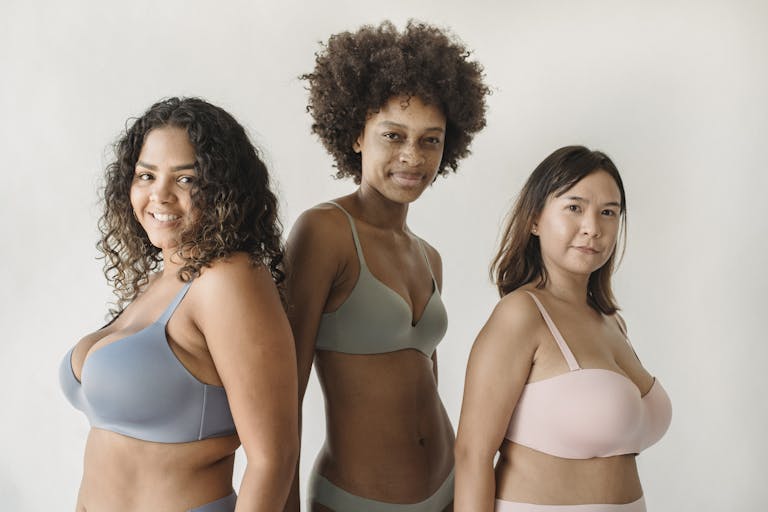
Sizes and shapes aren’t one and the same with push-ups. Petite bands with fuller cups, broader bands with shallow cups, and wide-set or center-full. Both small and full busts benefit.
Smaller cups may like subtle pads for balance under tees. Fuller cups can use side support and low-center padding to refine cleavage without crowding. Look for more inclusive brands that have extended bands, cups, and styles for asymmetry and projection.
Sister sizes are the push-up bra misconception. Confidence is about feeling supported, not squeezed! If long-term wear is uncomfortable, reexamine size, padding thickness, and strap tension.
A Confidence Tool
A properly fitted push-up can help posture cues, such as band anchoring around the ribcage and straps stabilizing lift, so you stand more naturally throughout a long workday.
Match style to outfit: light-lift t-shirt under knits, plunge for evening dresses, balconette for wide necks. For hectic days, wireless push-ups ease constriction without sacrificing form.
If you’re working out or at work, opt for breathable materials, sturdy bands and flexible cups and ditch the thick padding while exercising as it’s constricting. It is fine for everyday if comfort and fit guide you.
Let your lingerie reflect your style – minimal, romantic, or sporty – so you feel like yourself, not in costume.
How to Properly Wear Your Push Up Bra

Confirm size first with a fitting guide or measurement chart. Then adjust each component—band, straps, cups, and gore—so lift looks natural, never tight or rigid.
Keep a simple checklist: put the bra on while leaning forward, scoop tissue into cups, fasten on the loosest hook, fine-tune straps, check the center gore, move around, assess comfort, and align with your outfit. If anything feels off, such as gaps, digging, or slipping, pause and correct before dressing.
1. The Band
So clasp on the loosest hook to extend life as the elastic eases. A firm band provides the majority of the support, not your shoulders.
You want it level around your torso, parallel to the floor, without sneaking up your back. Slide two fingers beneath the band. This ensures a snug fit, not tight.
If it leaves deep red marks or impedes your breathing, size up in band or try a sister size. For strapless or razorback styles, re-verify the two-finger test. Specialty styles can feel tighter, and they should still be comfortable for hours, not minutes.
2. The Straps
Move straps to lie flat without biting. They’re stabilizers, not elevators. If they’re doing the heavy lifting, tighten the band instead.
With your arms raised and your shoulders rolled, straps should not slip. Don’t over-tighten, as this will cause neck tension or indentations.
For one-strap or racerback styles, establish an even lift by checking both sides in the mirror after a few shoulder rolls.
3. The Cups
Lean forward to settle your breasts completely into the cups, then scoop from the sides and underneath for smooth, gap-free coverage. The padding needs to sit under your bust so your breasts are resting on top of the padding or underwire rather than compressed flat for that natural lift.
Look for spillage at the top or sides. If you do, reach for a bigger cup or different shape. The cups should lie flat without wrinkling.
If you’re seeking more subtle shape for a long day at the office, choose lighter padding. For gowns or sleeveless wear, go with strapless or one-strap push-ups that seamlessly meld under fabric.
4. The Gore
Your center gore should lay flat on your sternum, an indicator of proper cup depth and alignment. If it floats, either the cup is too small or the style isn’t right for your shape.
It should not dig or sting. Discomfort in this area typically means you need a size or style change. Utilize the gore to verify even separation, particularly with plunge push ups.
5. The Final Check
Bend, twist and reach overhead. The bra should stay put and feel stable. Check for a nice silhouette under a thin shirt to spot lines or bumps early.
If anything pinches or chafes, reposition or size swap. Push up bras fit tighter, so limit wear time. If skin feels irritated, rotate to a regular bra for a few days.
Common Wearing Mistakes

Little wearing blunders with everyday bras accumulate to irritation, lost lift, and truncated bra longevity.
- Band riding up the back, a band that is too tight or too loose, or stretched elastic.
- Straps over-tightened to create lift, resulting in digging and shoulder pain.
- Cups too high or low, tissue not completely in, spillage or gaping.
- Floating gore, especially in plunge/demi styles.
- Padding too thick causing heat and moisture buildup.
- Wearing for more than 12 hours causes fatigue and chafing.
- Ignoring poky underwires or rough seams.
- Size/style mismatch that makes breasts jiggle or look lumpy.
Wrong Band Position
A band that creeps up your back robs support and strains straps to compensate. It should fit around your torso in one straight, firm line at the base of your bust, parallel to the floor and without cutting in. If it’s too tight, the band makes breathing feel restricted.
If it’s too loose, the cups lose contact and breasts jiggle with every step of everyday movement. Check stretch: If you can pull the band more than 5 to 7 centimeters away from your back, it’s likely worn out.
Swap in new stretched bands to bring back that lift and stability. Recheck placement during the day after activity. A quick reset can help avoid chafing. A proper band does the majority of the work, so you won’t have to cinch straps.
That shields shoulders and maintains the push-up effect, appearing natural under clothing.
Over-Tightened Straps
Tightening straps for extra lift sounds like a great idea. It transfers pressure to your shoulders and leaves you with deep imprint scars. That digging frequently indicates a band fit issue, not a strap issue. Aim for balanced tension: straps should sit flat without slipping or biting.
They offer some support, and the band does the grunt work. Re-adjust every few wears as fabric relaxes and your posture shifts throughout the day. If you still pursue lift by cranking straps, size check the band and cup before sliding sliders.
Incorrect Cup Placement
Cups must completely encapsulate breast tissue. There should be no side or top spillage, and there should be no neckline gaping or wrinkling. Recenter the cups if they sit too high or low. Then use the scoop-and-swoop: lean slightly forward, scoop tissue from the side and underneath into the cup.
Wrinkles usually indicate the cup is too big. A spill or a lumpy appearance points to it being too small or padding is drowning out your volume. Padding that’s too thick can trap heat and moisture.
Try lighter foam or breathable lining for long days. Wear for no more than 12 hours. Longer push-up wear increases the danger of chafing and exhaustion.
Ignoring The Gore
The gore—the center panel—should lay flat on your sternum. If it floats, then the cups are probably too small, the band too loose, or you’ve got a style mismatch to your root shape. Wear the wrong bra size or the wrong bra shape.
Try one cup size up, a firmer band, or a different architecture. Plunge works for close-set breasts, balconette suits wide roots, and demi provides lower coverage with lift. An anchored gore inhibits wire poking, jiggling, and keeps the push-up lift centered.
Gore fit should be your number one priority when trying new bras, particularly with underwires. A wire that doesn’t sit right will poke and chafe.
Finding Your Perfect Match
A good fitted push-up bra must boost, center and be comfortable to wear. Comfort establishes the foundation, size maintains the fit, and style adjusts the taste to various ensembles and events.
Consider these factors before moving on:
- Correct size with a measuring tape and a good sizing chart in centimeters.
- Breast shape and tissue distribution.
- Body proportions and torso length.
- Level of padding and support you prefer.
- Fabric and lining breathability for warm climates.
- Underwire vs. wire-free comfort tolerance.
- Band width, side support, and strap placement.
- Neckline compatibility: plunge, demi, or balconette.
- Daily routine: desk work, commuting, events, travel.
- Return policies, since trying different options is often necessary.
Your Body Shape
Figure out your shape first. If you’re curvy through the chest or back, wider bands with three to four or more hooks and firm wings streamline the sides and provide additional support.
For those with straighter frames, lighter bands with strategically placed padding can shape a natural curve without excess bulk. Petite frames tend to fare better with plunge or demi cuts. The lower center gore lays comfortably and pairs perfectly with V-necklines and wrap dresses.
Taller torsos may favor balconettes that counteract vertical proportion. If you have sloping shoulders or straps that slip, seek out closer-set straps, U-shaped backs or convertible styles.
Match structure to need: side boning for lateral support, a sturdier bridge for separation or stretch lace for gentle flexibility as bodies change over time.
Your Breast Shape
Start by assessing shape: full, shallow, wide-set, center-full, or asymmetric. Shallow or wide-set breasts usually benefit from graduated padding that nudges volume upward and inward.
Center-full shapes may prefer a narrower center gore to prevent pressing. For more roundness, molded cups or rounded T-shirt push-ups smooth under knits. Foam cookies or removable pads even out asymmetry.
Wear just one insert where necessary. Stay away from cups that gape at the top or leak near your armpit. Both indicate a difference between cup depth and your tissue.
Size counts. Measure snug underbust for band, then bust at the fullest point and cross-check with a chart. Go for sister sizes if necessary. Replace stretched bands with some regularity since fit and feel evolve.
Your Lifestyle
Daily wear requires breathable fabrics such as cotton blends or spacer foam. They mitigate heat and wick moisture. Commutes and long days require soft straps and brushed linings to keep you from getting rubbed.
As for action, save sports or high-support push-up hybrids for power walks or light workouts. Work-to-dinner outfits thrive on a plunge with soft edges that vanishes beneath a blazer and then dresses up an evening décolletage.
If you’re nursing, or just like to keep it easy, wire-free push-ups with flexible padding provide a soft lift. Keep a small rotation: different clothes and occasions demand different levels of shaping.
Confidence follows when comfort meets your plan.
Styling For Any Occasion
Push-up bras bend over backwards for lifestyles when you coordinate padding, neckline, color, and material to the outfit. Everyday bras are designed for wherever life takes you, aiming for polish and comfort, with support levels that fit the moment.
| Occasion | Style | Padding/Support | Colors | Materials | Notes |
|---|---|---|---|---|---|
| Daily errands | T-shirt push-up | Light to medium | Taupe, cocoa, soft pink | Microfiber, seamless | Invisible under thin tees. |
| Office/meetings | Structured demi | Light, firm band | Skin-tone match | Smooth knit, minimal lace | Clean lines under blazers. |
| Formal event | Strapless/longline | Medium to heavy | Black, deep red, navy | Satin, lace | Elevated look with gowns. |
| Night out | Plunge or lace | Medium | Jewel tones | Lace, satin | Statement details enhance necklines. |
| Summer/travel | Wireless push-up | Light | Neutrals | Breathable mesh, cotton | Cooler, easy to pack. |
| Backless looks | Adhesive/plunge | Adjustable inserts | Matches skin tone | Silicone, satin | For tricky cuts; test first. |
The Everyday Look
A sleek, lightly padded push-up bra cuts a clean line beneath basic tees, tanks, and button-downs. Dyed to match, the microfiber cups with bonded edges vanish beneath clingy fabrics, from modal to lightweight cotton.
Opt for neutrals that blend with your skin so they disappear underneath light or semi-sheer shirts. Beige goes all over the place, so go with golden-beige, rose-beige, or cocoa to prevent show-through.
All day wear demands a supportive band that rests level around the torso, as well as straps that can be adjusted to lift without digging. If you feel pressure on your shoulders, the band could be loose.
So keep the padding light for everyday wear, just enough oomph to contour, not so much that it arches away from your body when you sit. A light shove seems organic and still invigorates confidence.
The Professional Look
A structured fit with minimal lace maintains the silhouette sleek beneath fitted knits and tailored blazers, so you’ll look totally polished and put-together at work. Sculpting firm side wings and a secure center gore hold their shape through long days.
Consider matching color to your skin tone for white or pale shirts, as bright white bras tend to show. Silicone cups keep texture from printing through lightweight fabrics.
Prioritize comfort: breathable lining, wide straps, and a stable, snug band support focus. For professional events, a lightly padded demi provides subtle lift without stealing the show.
The Evening Look
For low necklines or dresses, a plunge push-up matches the neckline to highlight cleavage and frame a feminine balance. Lace or satin choices provide sophistication and intrigue.
Bold tones—emerald, burgundy, ink—play beneath darker dresses, and intricate embellishments can peek through semi-transparent panels. For special occasions, a sumptuous satin or lace push-up bra takes the entire look to another level.
Choose padding by intent: heavier padding suits formal events when you want a sculpted profile. Mesmerizing border design. Strapless or sticky styles resolve open shoulders, but check fitting and skin comfort prior to the evening.
Comfort, fit and outfit rule the day, and a perfectly fitting push-up always boosts confidence.
Long-Term Bra Care

Long-term care maintains lift, comfort, and shape so your push-up bra continues to provide its benefits. Respect bra longevity with simple habits, rotate wear, and replace everyday bras before they pinch or create a noticeable gap.
- Maintain a rotation of three to five bras to give elastic a break between wears.
- Don’t wear the same bra all day and night or over several days.
- Wash on a schedule: every 3 to 4 wears for regular bras, after each wear for sports bras or in hot weather, and after 1 to 2 wears for lace or delicate fabrics in warm conditions.
- Check once a month for frayed edges, pinhole-sized holes, loose stitching or broken underwire channels.
- Replace when support changes or the band feels loose on the tightest hook.
- Always store when completely dry.
- Track wear time: Synthetics support about 8 hours, cotton 5 to 7 hours, silk 4 to 6 hours.
Proper Washing
Hand washing preserves padding, foam and adhesive bonding. Take a small basin of cool water and a mild detergent free of bleach and fabric softeners. Soak for 10 to 15 minutes, gently swish and spot clean the underarm and band where oils accumulate.
Avoid machine washes and dryer action. Heat breaks down elastic and can bend underwires. Agitation twists straps and stretches bands. If the machine is unavoidable, put bras in a structured mesh wash bag, hook them up, select a delicate cycle, use cold water, and never, ever dry.
Rinse until clear. Soap film in foam retains moisture and deteriorates fibers. Lay flat on a towel or hang by the center gore so straps don’t stretch. Avoid direct sun or radiators because they cause fading and dry out elastics, causing them to become brittle.
Proper Storing
For long term bra care, flat store bras in a drawer so cups keep their contour. This keeps push-up padding in place and prevents unsightly dents that peek through sheer tops.
Nest cups in a row to save space and preserve shape. Don’t fold in half or tuck one cup inside the other. That crushes the foam and strains the wire channel.
For long-term bra care, make sure every bra is completely dry before putting it away. Even a damp band can break down elastic and breed bacteria funk.
When to Replace
Swap out when the band rides up even on the tightest hook, or when cups gape or cut after your body shifts. If you get less lift around noon, the elastic is likely finished.
Visible wear is a reliable signal: frayed straps, loose stitching, popped seams, exposed or squeaking underwires, or misshapen cups and padding. A well-rotated bra will last about a year, but it depends on the fabric and how long you wear it each day.
Conclusion
Finding a good-feeling, natural-looking push-up bra is all about fit, placement and maintenance. Wearing the correct band size, fully scooping into the cups, and adjusting straps for lift, not pressure, provides support without pinching. Steer clear of mishaps such as gaping cups, sliding bands, or strap dependence. Something that’s shaped to your body right now, experiment with cup shapes, plunge depths and padding. Sister sizes can help dial in the fit.
To make your bra last longer, rotate styles, hand-wash when you can, and air-dry flat. Think of your push-up as a styling tool, not a universal answer. With the perfect match, you get a sleek, elevated silhouette that fuels confidence, comfort, and everyday wear no matter your age.
Frequently Asked Questions
What is the right way to put on a push-up bra?
The band of your everyday bra should go on the loosest hook. Ensure the center gore is flat against your chest while adjusting the bra straps for support without digging. Remember to scoop and swoop: lift breast tissue into the bra cups for a rounded look, ensuring there is no gaping or spilling. Comfort and smooth lines equal the right fit.
How tight should the band and straps be?
Your everyday bra band should be snug and secure, providing the most support without being restrictive. Two fingers should fit comfortably under the band, while straps gently lift without leaving marks or digging in.
Why does my push-up bra cause spillage or gaps?
This typically indicates that your cup size is off. Spillage means your cups are too small, while noticeable gaps in your everyday bra suggest that the cups are too big or the style is wrong for your shape. Experimenting with sister sizes or different cup shapes can help you find the right size, as a proper fit cures both ailments.
Can I wear a push-up bra every day?
Yes, if it’s a good fit and it’s comfortable, especially with everyday bras. Rotate bras to maintain elasticity and choose airy materials for every day. If you feel pressure points or pain, consider the right size or style, ensuring comfort and support come first.
How do I pick the right push-up level and style?
Match the pushup bra padding to your natural shape and ensemble. Use light lift for subtle enhancement, medium for everyday bras, and plunge bras for low necklines. Wider-set bra cups flatter broad frames, while plunge bras enhance close-set breasts. Fit and comfort dictate the selection.
What outfits work best with push-up bras?
Push up bras are ideal for plunging necklines, form-fitting tops, and special-occasion dresses, offering shape enhancement and a fuller look. Seamless styles work well under lightweight fabrics, while convertible or strapless push-up bras suit open backs or shoulder outfits. Always check your bra lines in the daylight.
How do I care for my push-up bra to make it last?
Hand wash your everyday bras in cold water with mild detergent. Don’t twist the padded bra cups. Air dry flat, out of heat and sun. Save stacked store cups, not crumpled, and switch up your bras, wearing the loosest hook first to maintain the right size.